
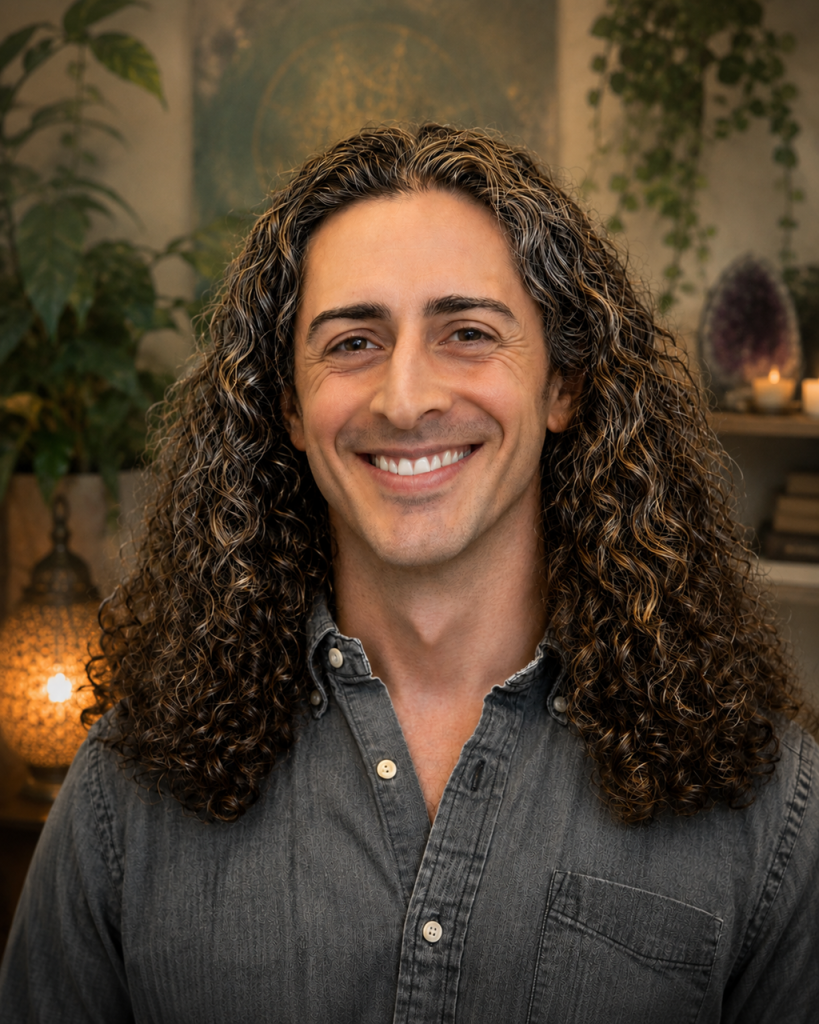
I’m Cameron, a relational and trauma-informed therapist offering online therapy for clients in New York. My work is grounded in the belief that therapy should feel like more than being analyzed, diagnosed, or handed a set of coping skills. It should feel like being met by someone who can sit with the complexity of your life, your history, your identities, your body, and the patterns you’ve had to carry in order to survive.
I work well with people who are insightful, self-aware, and still feel stuck. You may understand where your anxiety, over-responsibility, people-pleasing, shutdown, or relationship patterns come from — but still find yourself living from them. Together, we slow down enough to notice what is happening beneath the surface: the family roles you learned, the ways your body braces, the grief you have not had room to feel, the parts of you that learned to stay small, useful, impressive, guarded, or alone.
My approach is warm, collaborative, depth-oriented, and gently direct. I am especially attentive to the ways culture, race, gender, sexuality, family systems, trauma, spirituality, relationships, and systems of power shape how we come to understand ourselves. For queer and trans people of color, therapy often has to make room for what has been pathologized, minimized, or misunderstood elsewhere. I aim to offer care where you do not have to defend your life before we can begin the work.
I also enjoy working with therapists, helpers, organizers, creatives, and people who are used to holding a lot for others. Many of my clients are the ones other people turn to. In therapy, we make space for what it means to be the strong one, the capable one, the translator, the fixer, or the person who learned to keep going no matter what.
In our work, we may explore relationships, attachment, family patterns, identity, grief, trauma, boundaries, embodiment, and the deeper question of what it would mean to feel more honest, connected, and free in your own life. I will not rush you toward a version of healing that asks you to bypass what you have lived through. My hope is that therapy becomes a place where more of you can arrive — with care, steadiness, and room to change.